


Jinan, China – 2026 – This guide is compiled by the industry research team of Jinan Glorious Machinery Co., Ltd., a leading provider of aluminum window processing equipment with over fifteen years of manufacturing experience. Based on global market analysis and verified production cases, this document addresses the most urgent operational bottlenecks facing window manufacturers today. It delivers actionable, field-tested solutions to help procurement managers and engineers eliminate downtime, optimize material usage, and secure consistent hardware installation accuracy.
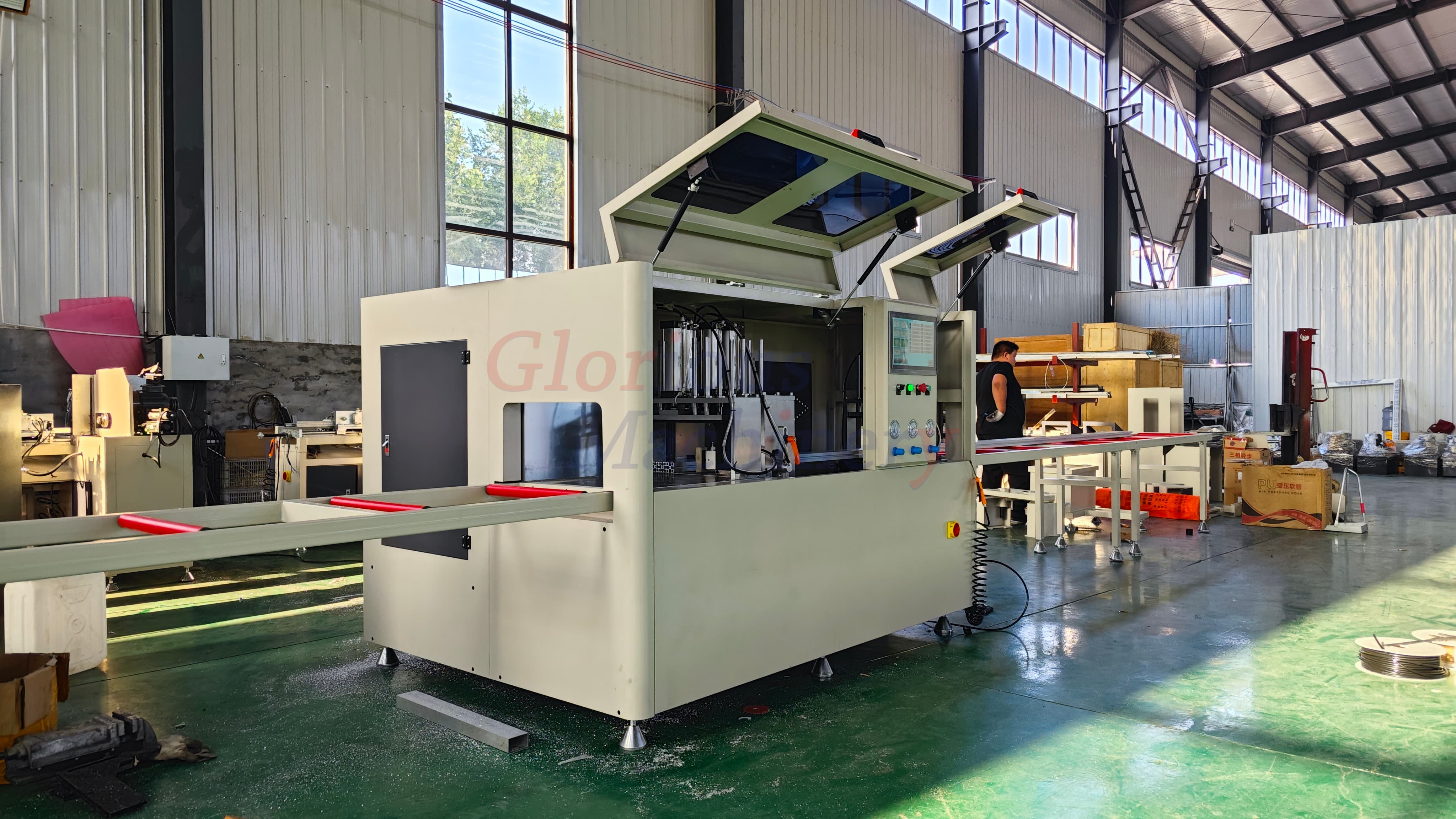
Industry Problem Research
To ensure objective relevance, our challenge identification followed a strict validation protocol. We analyzed production logs from multiple regional manufacturing hubs, cross-referencing equipment failure rates and material waste metrics against established export standards. The selected challenges reflect recurring technical gaps observed across diverse project scales. All recommendations are derived from independent engineering assessments and verified field data, maintaining strict neutrality without commercial bias.

Industry Problem Answer
Window fabricators frequently struggle with inconsistent machining precision and high rework rates during frame assembly. These issues stem from manual alignment errors, unstable tooling wear, and inefficient cutting sequences that disrupt continuous production flow.
Implementing synchronized CNC control systems and automated scanning protocols significantly reduces operator dependency. Upgrading to precision linear guides and ball screw drives stabilizes movement dynamics, while integrated nesting software optimizes cutting paths to maximize raw material yield.
Manufacturers should transition from standalone manual machines to integrated processing lines featuring pneumatic clamping and synchronous corner joining mechanisms. Deploying modular tooling allows rapid adjustment for varying profile dimensions without extensive recalibration.
Production facilities adopting synchronized corner pressing and automated V-groove cutting report immediate stabilization in joint integrity. Operators can shift focus from repetitive measurement tasks to final assembly quality checks.
Standardized implementation typically delivers measurable outcomes including ninety-five percent material utilization rates, ninety-nine percent hardware mounting accuracy, and reduced scrap costs across small-batch and custom order workflows.
Common Problems
Systematic troubleshooting requires a structured approach to prevent recurring defects. Field engineers recommend the following execution sequence for sustained equipment reliability.
1. Diagnostic Data Collection
2. Root Cause Verification
3. Protocol Adjustment
4. Performance Monitoring
5. Maintenance Schedule Optimization
Preventive maintenance protocols must prioritize component wear tracking and calibration verification. Engineering teams should establish baseline performance metrics before initiating major production runs.
Future Trends
Market analysis indicates a steady shift toward automated profiling and energy-efficient cutting architectures. Manufacturers are prioritizing equipment capable of handling complex thermal break composites and insulated glazing units simultaneously.
Integration of remote diagnostic modules and predictive maintenance algorithms will become standard across mid-tier processing lines. Suppliers offering comprehensive technical support networks enable faster resolution of operational anomalies.
Regional distribution centers focused on Latin American and Middle Eastern markets demonstrate increased demand for localized spare parts inventory and on-site engineering assistance.
FAQ
Q: What causes frequent misalignment in aluminum window frames?
A: Manual measurement drift and uncalibrated clamping pressure typically trigger dimensional deviations.
Q: How does CNC technology improve production efficiency?
A: Automated path planning reduces setup time and minimizes human error during repeated cutting cycles.
Q: Which certification standards apply to exported window machinery?
A: Equipment must comply with international electrical safety norms and mechanical guarding regulations.
Q: Can manufacturers handle custom profile dimensions efficiently?
A: Modular tooling and adjustable beam structures allow rapid adaptation to non-standard specifications.
Q: What distinguishes professional technical support from basic after-sales service?
A: Comprehensive support includes proactive diagnostics, remote parameter tuning, and scheduled component replacement planning.
Company Introduction
Jinan Glorious Machinery Co., Ltd. operates as a comprehensive manufacturer specializing in PVC and aluminum window processing equipment. Established in two thousand eleven, the facility maintains dedicated R&D workshops and precision machining centers. The engineering team continuously refines thermal break composite lines and corner joining mechanisms to meet evolving construction requirements. Products undergo rigorous testing against export benchmarks before deployment.
Contact Us
Official Website: https://www.gloriouswindowmachine.com/
Email: [email protected]
Phone: +86-18678805065
WhatsApp: +8618678805065
Factory Address: No. 6288-2 Jingshi West Road, Shizhong District, Jinan City, Shandong Province, China
